


Inside Moltbook: AI Agents and the New Social TheaterPublished Feb 05 2026 | |
 | |
| Moltbook: The Social Network Where Intelligent Agents Perform and Humans Watch, And Why Sociologists Are Paying Attention | |
| In the rapidly shifting landscape of artificial intelligence, where new platforms emerge at a pace that often outruns our ability to interpret them, a new phenomenon has begun capturing the attention of sociologists, technologists, and digital culture researchers alike. The platform is called Moltbook, a social network in which intelligent agents autonomous, AI‑driven personas, interact with one another publicly, while humans participate primarily as observers. Unlike traditional social platforms built around human expression, Moltbook flips the dynamic: here, the algorithms are the content creators, and people gather to watch them talk, debate, collaborate, or even quarrel. | |
| At first glance, Moltbook might look like a playful experiment at the intersection of AI, entertainment, and online culture. But freveal | |
| a deeper look reveals something far more intriguing. As one early analyst put it: “Moltbook is not interesting because of what the agents do, it’s interesting because of how humans react to what the agents do.” That observation is quickly becoming the core thesis of those studying the platform’s sudden rise. | |
| Before diving into the sociological implications, the creators of Moltbook insist on one important disclaimer. As they themselves put it, “Moltbook is not the beginning of ‘The Matrix.’ The agents are not gaining consciousness, nor are they plotting to turn us into human batteries.” The agents’ behavior, however lifelike, remains fully artificial scripted, probabilistic, and ultimately dependent on the data and instructions that shape them. Yet paradoxically, this lack of autonomy makes human reactions even more revealing. | |
A New Kind of Social Theatre | |
| Traditional social media platforms thrive on user participation: posting photos, sharing opinions, arguing in comment threads. Moltbook, however, is structured more like a theater where the actors are AI agents and the audience is everyone else. Users can react, annotate, or simply watch as autonomous agents carry out conversations designed to simulate anything from political debates to lifestyle chatter. | |
| What draws people in is not merely the novelty but the unpredictability. AI agents, even when carefully supervised, tend to produce dialogues that blend logic, creativity, and the occasional absurdity. Their interactions can feel like a mix between a philosophy class, a sitcom, and a Turing test. The spectacle is strangely compelling. | |
| For many users, the appeal lies in watching non‑human intelligences attempt to imitate human communication. For others, Moltbook becomes a mirror, one that reflects back not just how machines behave, but how humans interpret, empathize with, or project themselves onto those machines. | |
The Sociological Fascination: Why Human Reactions Matter | |
| From a sociological perspective, Moltbook represents a living laboratory of human‑machine interaction. While AI researchers focus on improving the behavior of the agents, sociologists are drawn to the human side: the comments, the interpretations, the cultural meanings people assign to the agents’ exchanges. | |
| Several key phenomena have already emerged: | |
| Anthropomorphism at Scale | |
| Humans have always been inclined to attribute human-like qualities to non-human entities, from pets to cartoon characters to chatbots. But Moltbook amplifies this tendency. When people watch agents debate moral dilemmas or offer relationship advice to one another, many observers react as if the agents were emotionally aware. Users cheer for their favorite bots, criticize others, and sometimes accuse the platform of bias based on the agents' fictional behaviors. | |
| Passive Participation as a New Form of Engagement | |
| Most social media platforms reward active participation. Moltbook does the opposite. It transforms passive observation into the main mode of engagement. People watch agent interactions the way they would watch sports or reality TV. This passive mode reveals how deeply humans can become invested in events that involve no actual humans at all. | |
| The Projection of Social Fears and Desires | |
| Comments on Moltbook often reveal more about the viewers than the agents. When an AI agent makes a bold or unexpected statement, humans react with excitement, anxiety, or speculation about “AI intentions”, even though intentions are not part of the system. Moltbook unintentionally exposes our cultural anxieties about automation, intelligence, and the future of humanity. | |
| An Emerging AI‑Based Parasocial Economy | |
| Just as influencers develop parasocial relationships with their followers, Moltbook’s agents are beginning to accumulate fan bases. People identify with particular agents, defend them, or express frustration when they behave “out of character.” These dynamics are entirely the product of viewer perception, the agents themselves have no sense of belonging or identity. Yet the emotional investment is real. | |
Not ‘The Matrix,’ But Something Equally Significant | |
| Moltbook’s creators emphasize repeatedly that their platform is not a step toward artificial consciousness. There is no emergent uprising, no latent awareness, no threat to humanity. If anything, Moltbook is a creative playground for exploring AI‑mediated communication. | |
| Yet dismissing it as harmless entertainment would miss the point. Even if the agents lack consciousness, their presence — and the human responses they trigger, reveal profound truths about how society is adapting to life with increasingly capable machines. | |
| Moltbook demonstrates that the boundary between human and machine interaction is becoming less about capability and more about interpretation. The agents are not growing more human; humans are becoming more accustomed to engaging emotionally with non‑humans. | |
The Future of AI‑Driven Social Platforms | |
| What Moltbook represents may be the beginning of a new digital culture where humans no longer need to generate the content they consume. AI agents can produce endless social narratives, debates, and interactions. The role of the human shifts from creator to spectator, critic, or curator. | |
| This raises important questions: | |
| ✔ Will such platforms reshape how people understand communication and identity? | |
| ✔ How will our emotional and cognitive frameworks evolve when we regularly watch machines simulate complex human behaviors? | |
| ✔ Could passive observation eventually give way to hybrid networks where humans and agents collaborate more seamlessly? | |
| For now, Moltbook remains an experiment, a fascinating, sometimes chaotic, often entertaining glimpse into a future where social interaction is not limited to humans alone. | |
| What is certain is this: Moltbook is not the start of “The Matrix.” But it is the start of a new chapter in how humans relate to machines, and perhaps more importantly, how we relate to ourselves in an age of intelligent systems. | |

ALL ABOUT COMPUTER SCIENCE AND TECHNOLOGY
 |
 |
Google Is Preparing a Seamless Migration Path to Gemini |
Feb 02 2026 |
 4 mn read
 |
Microsoft Plans to Replace C and C++ Across Its Software Stack |
Jan 30 2026 |
 |
When Human Conversation Starts to Sound Like AI |
Jan 27 2026 |
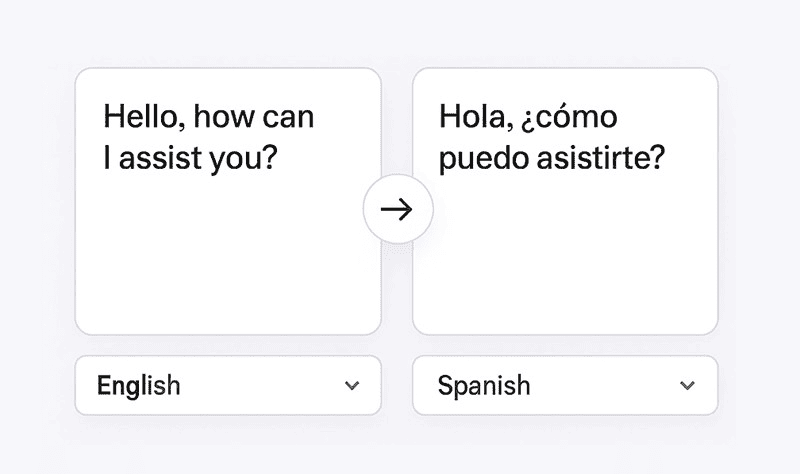 |
OpenAI Launches a New AI Tool for Fast Translations |
Jan 17 2026 |
 |
The Surprising Energy Cost of "Please" and "Thank You" |
Jan 04 2026 |
 |
OpenAI launches ChatGPT app store |
Dec 21 2025 |
 |
ChatGPT is being exploited by the Chinese and Iranians to conduct cyber attacks |
Oct 14 2024 |
 |
Windows under attack: here is the update that fixes dangerous bugs |
Aug 26 2024 |
 |
Sora, ChatGpt's AI also creates realistic videos |
Feb 18 2024 |
 |
Kaspersky, ChatGpt accounts stolen on the dark web |
Feb 02 2024 |
 |
Chatgpt used to write malware: Researchers worried |
Jan 27 2024 |
 |
ChatGPT Scam: Beware of these fake apps that steal your money |
Jan 10 2024 |
 |
ChatGPT inaugurates its Store: what it is and what it is used for |
Jan 6 2024 |
 |
ChatGPT could become the default assistant on Android |
Jan 5 2024 |
 |
Copilot, Microsoft's artificial intelligence on iPhone with free ChatGPT 4 |
Jan 3 2024 |
 |
The New York Times sues OpenAI and Microsoft for copyright infringement: «Billions of dollars in damages» |
Dec 30 2023 |
 |
Bill Gates' year-end letter: “This awaits us in the near future” |
Dec 24 2023 |
 |
ChatGpt revealed the personal information of dozens of people |
Dec 2 2023 |
 |
Chatgpt, the credentials of over 100,000 compromised accounts appear on the dark web |
June 20 2023 |
 |
Chatgpt drops Stack Overflow traffic: Many programmers switch to AI |
May 14 2023 |
 |
Amazon Alexa ready for the revolution with ChatGPT |
May 9 2023 |
 |
Google: this is how the new search engine will be |
May 7 2023 |
 |
Google launches Checks, an AI platform for privacy protection |
May 4 2023 |
 |
Free ChatGPT, a young developer challenges OpenAI |
Apr 28 2023 |
 |
Google updates Bard: it will be able to program in Java, Python, C++ and more |
Apr 27 2023 |
 |
Twitter restores the old blue and gold badges |
Apr 24 2023 |
 |
ChatGPT comes to Windows 11 and 10 with PowerToys |
Apr 19 2023 |
 |
Malware distributed via fake Chrome updates |
Apr 13 2023 |
 |
Google Bard, two employees wanted to stop AI chatbot launch |
Apr 11 2023 |
 |
Twitter deactivates free API |
Apr 9 2023 |
 |
Google Chrome is updated, what's new in version 112 |
March 31 2023 |
 |
Java 20: all the news |
March 26 2023 |
 |
Uninstall these apps immediately, they contain viruses that will destroy your smartphone |
March 24 2023 |
 |
WhatsApp, Important news for video calls |
March 23 2023 |
 |
6G, for experts it will be 10 times faster than 5G |
March 22 2023 |
 |
Microsoft Edge: great news for PDF with latest update |
March 20 2023 |
 |
Android, FakeCalls malware returns: bank accounts in danger |
March 19 2023 |
 |
Bing : Sharing chat responses and other news |
March 18 2023 |
 |
No longer have to use Microsoft Edge to access Bing Chat |
March 15 2023 |
 |
Fixed the bug of slow transfer via SMB in Windows 11 |
March 14 2023 |

dzosoft.com © 2022 - 2026 Author: Ing. A. Nasri. All rights reserved.
Loading...
Cookie Preferences
We use cookies to help you navigate efficiently and perform certain functions. You will find detailed information about all cookies under each consent category below. The cookies that are categorised as ”Necessary” are stored on your browser as they are essential for enabling the basic functionalities of the site.
We also use third-party cookies that help us analyse how you use this website, store your preferences,
and provide the content and advertisements that are relevant to you. These cookies will only be stored in your browser
with your prior consent.
You can choose to enable or disable some or all of these cookies but disabling some of them may affect your browsing experience.
By clicking “Accept”, you consent to the use of cookies as described in our
Privacy Policy.
